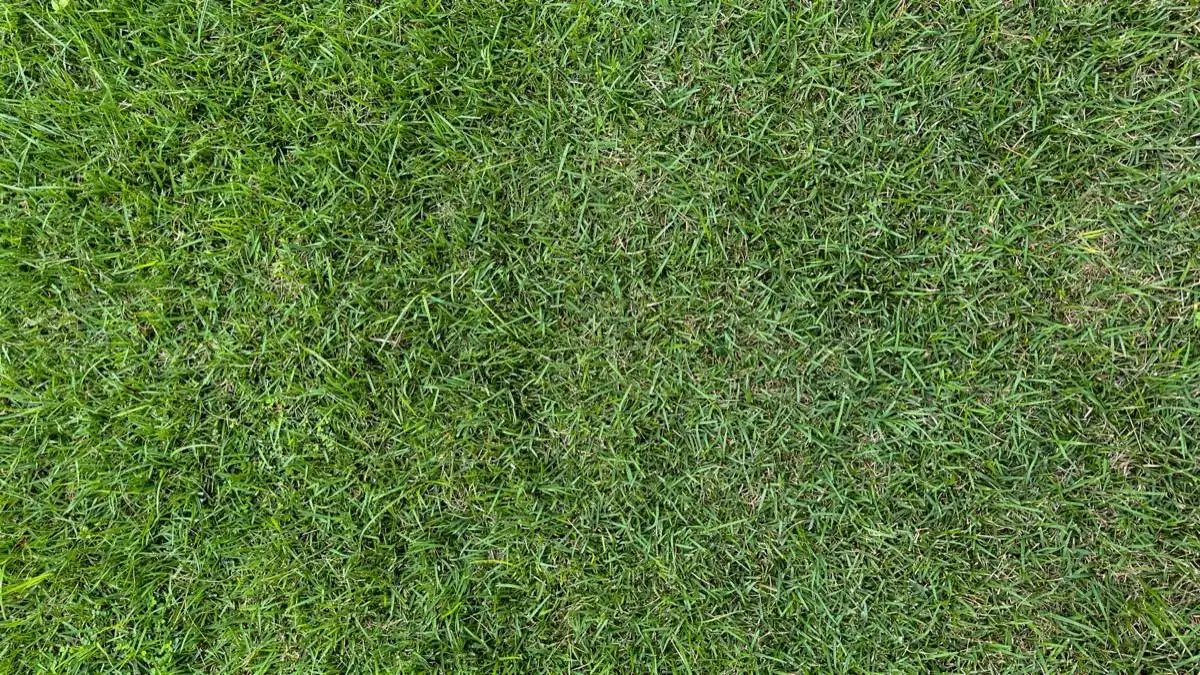
New sod needs water two to three times a day for the first two weeks, then once a day for a week, then two or three deep soakings a week. The first watering happens within 30 minutes of the last piece being laid, and it needs to be a heavy one.
Watering is the whole job. Sod is a living thing with its roots freshly cut off, and for two weeks it depends entirely on you. Almost every failed install we get called out to is a watering failure, not a product failure.
The schedule
| Stage | Frequency | Amount each time | Goal |
|---|---|---|---|
| First watering, day 0 | Immediately after install | 0.5–1 inch, soak it | Wet soil 3–4 inches beneath the sod |
| Days 1–14 | 2–3× daily in heat, 1–2× in mild weather | ~0.25 inch | Never let it dry out |
| Days 15–21 | Once daily, longer run | ~0.5 inch | Push roots deeper |
| Days 22–28 | Every other day | ~0.5 inch | Begin weaning |
| Week 5 onward | 2–3× per week | ~0.5 inch, or 1 inch weekly total | Deep, infrequent, established |
That table is for warm-season sod — Bermuda, Zoysia, St. Augustine — going into warm soil. Cool-season sod laid in fall wants materially less: a fescue lawn installed in October may need one cycle a day and none in a wet week. A 104-degree week means more; a cool, cloudy stretch means less.
Worth knowing that university guidance runs more conservative than installer practice. Mississippi State Extension's P2951, Sod Installation and Maintenance, asks for about one irrigation event a day in week one — more in summer heat — then daily, then every other day after two to three weeks, with the target described as soil "soft underfoot but not oozing wet." Same condition, fewer cycles. Judge by the ground, not by the row.
Day zero matters more than any other day
The first watering happens as the crew is finishing, not that evening. Sod stacked on a pallet has been losing moisture since it was cut, and dry sod shrinks — which is what opens the seam gaps that never quite close.
Soak it. Not a rinse. Water has to move through the sod and into the prepared soil beneath, three to four inches down — often 30 to 45 minutes per zone on a normal system, considerably more than a normal cycle. Then verify it, with the tool in the next section.
The screwdriver is the whole diagnostic
Forget guessing by look: sod stays green on top while the soil under it goes dry as a brick.
A long flathead screwdriver pushed straight down slides through moist soil and stops at dry. If it goes four inches easily, you are there; if it stops short, water more. Do it in three or four spots — the hottest corner, and the spot farthest from a head — before and after a cycle. Ninety seconds, and it tells you what a moisture meter would, for free.
Also lift a corner every couple of days in week one. The underside should be dark and damp. Dry underside over dry soil is a coverage problem, not a duration problem, and running that zone longer will not fix it.
Coverage problems are the usual culprit
The most common failure is not "I did not water enough" but "I watered plenty and one corner never got any." Look for:
- The strip along a driveway or south wall, taking radiant heat off the concrete and drying hours faster than the middle of the yard
- Gaps between heads. Coverage should be head-to-head, each head throwing all the way to the next
- Blocked or misaligned heads, now that the sod has changed the grade
- Wind drift on a spray system in an exposed yard
- Slopes, where water runs off before it soaks in — split those into two shorter cycles half an hour apart
Put tuna cans out and run a zone fifteen minutes. If one holds twice what another does, the problem is distribution.
Overwatering, which starts around week three
For two weeks it is genuinely hard to overwater sod. After that it becomes easy, and it does real damage.
Permanently saturated soil has no air in it, and roots need oxygen. Worse, water always sitting at the surface gives roots no reason to go deeper — so you get a lawn with a two-inch root system that collapses the first weekend you go away in August.
Signs you have gone too far:
- Ground feels spongy or squelches underfoot
- A sour, swampy smell
- Water standing more than an hour after a cycle
- Mushrooms
- Yellowing that looks like drought but is not, and gets worse when you water more
Tapering exists to train roots downward. Deep and infrequent from week five is not just water conservation; it is what builds a lawn that survives a bad summer.
What tells you to start tapering
Not the calendar. The sod does, through the tug test in our guide to how long sod takes to root — warm-season lawns usually pass around day 10 to 14, cool-season sod in fall soil later. Until it passes, hold on the establishment rows and re-check every three days. After, step down to the day 22 line and keep stepping.
One watering instruction belongs to the first mow: do not run the sprinklers the morning you plan to cut. P2951 makes the point in reverse, warning that properly watered sod can leave soil "too soft and susceptible to tracking" — exactly what a mower and the person behind it do to ground still knitting. Dry off a few hours, cut, then water. Deck height is a separate question with a species-specific answer, and our installation mistakes guide has it.
Watering softens the ground, which tightens the traffic rule
Everyone knows to stay off new sod. What gets missed is that a lawn on this schedule is the wettest it will ever be, and saturated ground gives way under loads dry ground carries unmarked.
So the rule is stricter than "no football for two weeks." No wheelbarrow cutting the corner, no ladder feet, and be deliberate about the hose — dragged diagonally over fresh seams, a charged hose shifts pieces that have nothing holding them yet. If you are hand-moving sprinklers three times a day, plan the route before day one and walk the same line every time, because you are about to walk it forty times. Our installation mistakes guide covers the damage underneath.
When you should not call anyone
This is a genuinely DIY job. It does not want a professional, it wants a schedule and a screwdriver. Set the timers before the sod arrives and put a phone reminder on the midday cycles.
Where a call is worth it: if you will be traveling in the first two weeks, do not install sod — move the date. No schedule survives an unattended house in July, and premium turf does not compensate for four missed days. If a section browns despite good watering, suspect coverage or grade; our guide to preparing a yard for sod covers the grading side.
North Las Vegas Elite Sod & Turf lays Bermuda sod and other warm-season turf around North Las Vegas and the Las Vegas Valley, over soil prep and grading that let a cycle soak in instead of running to the low corner. The schedule goes to you in writing on install day, marked for your grass and the month we laid it.
Get a free quote → · call (833) 756-7265
Ready for a free quote in North Las Vegas?
North Las Vegas Elite Sod & Turf — free estimate, clear scope, no pressure. Use the form on this page or jump to the homepage quote.
Related services in North Las Vegas
North Las Vegas Elite Sod & Turf money pages — go straight to the service you need.
- Hybrid Bermuda Sod →
Hybrid Bermuda sod is the only grass we install in North Las Vegas without a caveat attached, because it is the one warm-season turf that genuinely belongs in the Mojave: deep-rooted, heat-proof, self-repairing, and thrifty enough with water to survive a valley irrigation schedule. We install Tifway 419, TifTuf, Celebration and Midiron, and the cultivar choice is a real decision rather than a shrug.
- Land Grading & Caliche Excavation →
Land grading in North Las Vegas is really caliche work with a nicer name. Caliche is the cemented calcium carbonate hardpan that runs through Las Vegas Valley soils, commonly one to four feet down and sometimes six inches under your boots, and it is hard enough that the honest tool is a hydraulic breaker or a rock hammer rather than a shovel and encouragement.
- Topsoil & Soil Amendment →
Soil amendment is most of what you are actually buying when you buy a landscape in North Las Vegas, because the six inches under the grass decide everything that happens for the next decade. Valley soils commonly test near pH 8.5, carry very little organic matter, hold free calcium carbonate in quantity, and accumulate salt because there is not enough rainfall to flush it.
- Tall Fescue Sod →
Turf-type tall fescue sod is the grass you buy when you want a green lawn in January and you have decided the water bill is worth it. It is the best cool-season turf for desert heat, it holds color twelve months a year, it takes shade far better than Bermuda, and University of Nevada Extension puts it among the highest water users of any turfgrass they list.
- Zoysia Sod →
Zoysia sod is the slow, dense, low-input middle ground between Bermuda and fescue, and it is the right call for a North Las Vegas yard that gets admired more than it gets abused. It grows slowly enough that you mow less, densely enough that it crowds out most weeds without a chemical program, and it uses water in the same neighborhood as Bermuda rather than fescue.
Frequently asked questions
How often should you water new sod?
Days 1 to 14, water two to three times a day in hot weather, keeping the sod and the top few inches of soil beneath it continuously moist. Days 15 to 21, drop to once a day and water longer. Weeks four onward, taper to two or three deep soakings a week.
How much water does new sod need?
The first watering should be heavy — enough that the soil under the sod is wet three to four inches down, usually half an inch to an inch of water. Follow-up waterings are lighter, roughly a quarter inch each, but frequent. Depth on day one, frequency after.
What time of day should I water new sod?
First round early morning, then mid-morning and mid-afternoon as needed during establishment. Once the sod is rooted, water only in the early morning. Evening watering on established turf leaves the blades wet overnight, which is how fungal disease gets started.
Can you overwater new sod?
Yes, and it is a real problem after the first two weeks. Constantly saturated soil starves roots of oxygen and encourages them to stay shallow instead of chasing moisture downward. Signs are a spongy feel underfoot, a sour smell, standing water, and mushrooms.
When can I stop watering new sod twice a day?
When it passes the tug test, which is usually day 10 to 14 in warm weather and later in cool soil. That is the signal to leave the establishment schedule for once daily, then every other day, then two or three soakings a week. Tapering on the calendar instead either drowns a lawn that rooted early or strands one that has not.
Should I water new sod if it rains?
Check before you skip. Push a screwdriver through the sod into the soil — if it slides in easily to four inches, you have enough. A brief shower wets the blades and almost nothing else, which fools plenty of people into skipping a watering that new sod could not afford to miss.
Local context
How this applies in North Las Vegas, NV
Every article here is written from sod installation work done in North Las Vegas and the Las Vegas Valley, so the numbers reflect local labour, permit and material costs rather than a national average. Your own job can land either side of them depending on access, the condition of what is already there, and the materials you pick — Tifway 419 hybrid Bermuda sod, TifTuf Bermuda, Celebration Bermuda.
The way to turn any of this into a real answer is to have someone look at your actual situation. The free estimate is free, itemized and written down, with no deposit and no obligation. Call (833) 756-7265 or start on the North Las Vegas Elite Sod & Turf homepage.
Areas North Las Vegas Elite Sod & Turf covers
North Las Vegas first, then the surrounding communities of the Las Vegas Valley. Each has its own page with local detail rather than a copy of this one:
- Las Vegas, NV — Clark County, incorporated in 1911, population 641,903 at the 2020 census
- Henderson, NV — Clark County, incorporated in 1953, population 317,610 at the 2020 census
- Enterprise, NV — unincorporated Clark County, established as a town in 1996, population 221,831 at the 2020 census
- Spring Valley, NV — unincorporated Clark County, established as a town in 1981, population 215,597 at the 2020 census
- Sunrise Manor, NV — unincorporated Clark County, formed in 1957, population 205,618 at the 2020 census
- Paradise, NV — unincorporated Clark County, established as a town in 1950, population 191,238 at the 2020 census
Or jump to the full list of North Las Vegas services.
More from the North Las Vegas Elite Sod & Turf blog
- Sod vs Seed in North Las Vegas: Speed, Cost, and Which to Pick
Sod vs seed for North Las Vegas, NV lawns — the real cost gap per square foot, why some grasses cannot be seeded, and when seed wins.
- Sod Installation Mistakes in North Las Vegas Yards
Sod installation mistakes that kill lawns in North Las Vegas, NV — pallets left overnight, aligned seams, and the watering error nobody admits.
- Buffalo Grass Sod Pros and Cons for North Las Vegas Lawns
Buffalo grass sod pros and cons in North Las Vegas, NV — the lowest-water lawn grass there is, and where Bermuda wins instead.
The North Las Vegas Elite Sod & Turf Team
sod installation specialists serving North Las Vegas, NV
Written by the North Las Vegas Elite Sod & Turf team — insured sod installation pros with 15+ years serving North Las Vegas, NV and the surrounding area.